
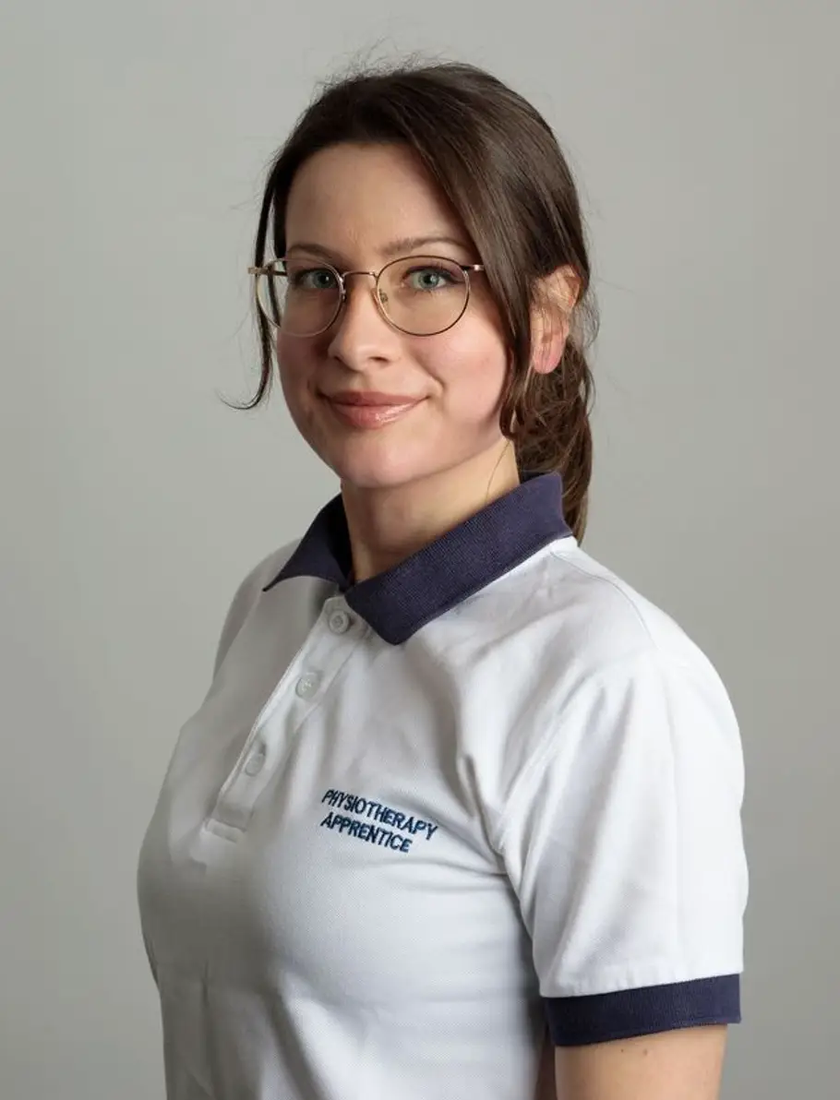
Barbara currently works in our Physiotherapy Department as an Assistant Practitioner Apprentice Physiotherapist.
She chose an apprenticeship at CUH because she wanted structured, hands-on exposure to a wide range of Physiotherapy specialties and to understand how different services work in practice.
She has been interested in studying Physiotherapy for a long time, and felt CUH was the right place for her to develop clinically whilst completing her degree.
Barabara says that gaining consistent real-world clinical experience alongside academic learning are the key advantages of the apprenticeship route for her.
Why do you think that CUH are a good employer for apprenticeships?
CUH is an excellent employer for apprenticeships because it has a great teaching culture, as well as having a strong reputation across the UK. It is a leading and teaching hospital; it offers exposure to high clinical standards and uses evidence-based practice as well as having a wide range of specialist services.
The Physiotherapy Apprenticeship Programme is well structured and delivered. It has clear expectations and strong supervision frameworks. Having exposure to different specialities makes it possible to balance academic study with clinical practice successfully. CUH provides a supportive environment where learning, reflection, and progression are prioritised.
What does a typical day look like and what do you enjoy about your role?
A typical day involves assessing and treating patients under supervision, supporting rehabilitation progression for patients, completing clinical documentation and working closely with the Multi-Disciplinary Team (MDT). Having exposure to different patient presentations helps develop strong clinical reasoning and practical skills. I particularly enjoy problem-solving and reflecting on sessions I have completed with the patient, which helps me continuously improve my practice in a supportive environment.
What sorts of things do you do for the off the job learning aspect of your apprenticeship and does this involve attending college or is it all completed at work?
My off-the-job learning combines protected study time and structured learning within my workplace, all of which are directly related to my apprenticeship programme and professional development. Overall, my off-the-job learning comprises protected study days, academic and reflective learning activities, clinical skills training, and competency development.
I use my study days for completing assignments and coursework, independent study and revision, as well as online learning sessions and tutorials provided by the university. We have to attend university once a week for a full day, and the rest of the week we are at work. The university days are scheduled as teaching blocks, which consist of lecturers, tutorials, and practical sessions. Terms 1 and 2 are delivered in person and Term 3 is online.
How have your department supported you within this apprenticeship?
I receive regular supervision, constructive feedback, and opportunities to gradually increase knowledge and responsibility.
What are your future intentions?
I am currently in my second year of the Physiotherapy degree, and I aim to complete with a first class. After graduation, my goal is to work in prevention, prehabilitation and rehabilitation to improve the health and quality of life of people. I am committed to progress within CUH, with the long-term goal to become a Band 7 Physiotherapist and hopefully be involved in research.
Many apprentices bring unique perspectives or experiences to their roles (for example neurodiversity, ethnicity, faith, or personal circumstances). Is there anything about your personal background or identity that you feel has influenced and/or strengthened your apprenticeship journey?
Moving to the UK from Hungary meant adapting to a new culture, language, and healthcare system, which has developed my resilience, independence and communication skills. It has also given me a broader perspective on patient care and the importance of being person-centred, as I understand what it can feel like to navigate unfamiliar systems. Being bilingual and from a different background helps me to connect with a wider range of people as well as to stay open-minded.
What advice would you give to others who may be looking to take on an apprenticeship?
My advice is to stay curious, proactive, and honest about your learning needs. Asking many questions is essential for learning, evidence-based practice and patient safety. I would encourage others to step out of their comfort zone as some of the most valuable learning happens when you challenge yourself, try new tasks and reflect on those experiences.