
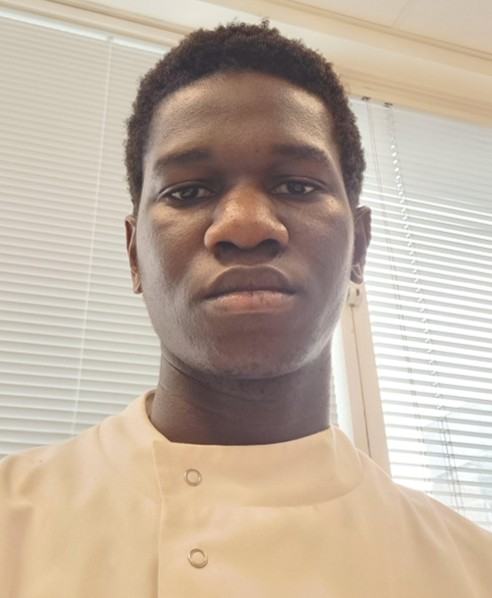
T-level Laboratory Science 2026 Adeniran Adedotun Ayanfe Bank Biomedical Support Worker Haemato-Oncology Diagnostic Service (HODS). Adeniran chose to do a T-Level as he felt that this was a more attractive alternative after not quite achieving the required grade to pursue the traditional A Level pathway. He liked the idea of the extensive 315 hours of work placement time and was thrilled by the opportunity to complete this at CUH. His goal from the very start was to fully immerse himself into the department and maximize every bit of experience, knowledge and skills that came within the department and the Trust.
What did a typical day look like?
A typical day is relatively fast paced and is split between administrative tasks and basic laboratory duties. It involves supporting the laboratory team with the processing and preparation of diagnostic bloods and tissue samples. My routine workflow includes sorting booking and preparation of samples arriving from different hospitals.
What did you enjoy about your role and what are your future intentions?
What I enjoy about my role is being able to work effectively and efficiently in a team. I intend to gain more years of experience working in a diagnostic laboratory before progressing into further study in the future.
What advice would you give to others who may be looking to take on a T-Level and how do you think it relates or helps you with regards to further study – Apprenticeship / University?
I would say to anyone considering taking this pathway that T-Levels offer an extensive industry placement which helps bridge the gap between school and employment by easing your transition into standard working hours. It also gives you a more detailed insight on what career pathway you might want. If you are someone who possesses good manual dexterity, taking the T-Level pathway might be suitable for you. They carry the same weight as A levels, combining the academic equivalence and what sets you up perfectly for the next stage.
What are the most important skills for life that you have developed in your role?
I think that the most important skills for life that I have developed are soft skills, such as communication, time management, problem solving and adaptability. These skills, regardless of any role, will be vital to have working in any field.
Where are you now since finishing your qualification?
Since finishing my qualification, I have been working as a Bank Biomedical Support Worker at the Haemato-Oncology Diagnostics Service Department (HODS).
Do you think doing the T-Level and hands on placement helped you in gaining employment with the Trust and if ‘Yes,’ why?
Yes, I do think it helped as my placement provided invaluable laboratory experience and gave me firsthand access to employers. This truly set me up for success as it allowed me to prove my employability and work ethic in real time. Additionally, it allowed for effortless networking, as being able to speak directly with established professionals has helped me to map out a clear long-term pathway within the Trust.